

One of the most frequently encountered health problems in men as age advances is prostate enlargement. Called Benign Prostate Hyperplasia (BPH) or Prostate Hypertrophy in medical terminology, this condition directly affects quality of life and must be evaluated by specialists in the field. As Dr. Atasoy Clinic, we aim to provide solutions to your urological health problems with the most current, scientific, and patient-focused approaches. In this comprehensive guide, we will detail the methods used in prostate hypertrophy treatment, surgical options, drug therapies, and post-treatment periods.
What is Prostate Hypertrophy (BPH) and What Causes It?
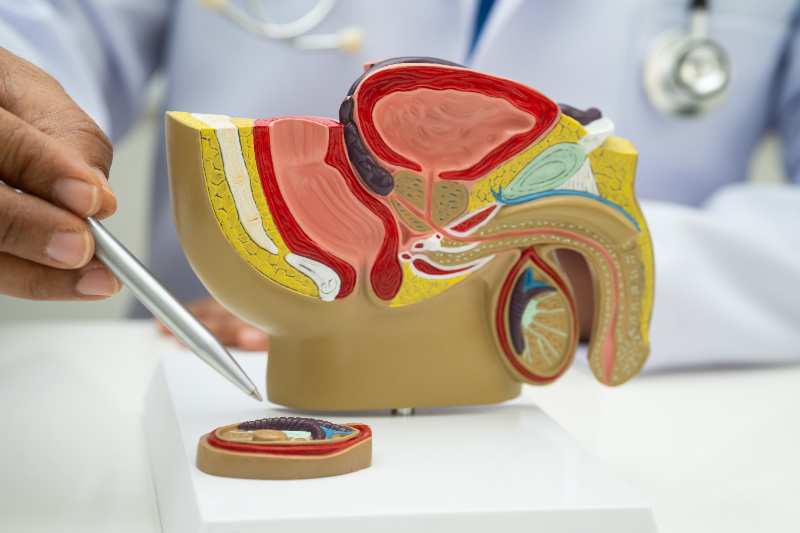
The prostate is a walnut-sized secretory gland found only in men, located just below the bladder and surrounding the urethra (urinary canal). Its primary function is to produce the liquid portion of semen. However, due to advancing age, hormonal changes, and genetic predisposition, this gland gradually begins to enlarge.
This enlargement is not cancerous growth; therefore, it is called "benign prostate enlargement." However, as the prostate gland enlarges, it begins to put pressure on the urinary canal passing through it. This pressure makes it difficult for the bladder to empty urine and over time prepares the ground for various complaints in the urinary tract. Many patients who come to Dr. Atasoy Clinic typically seek treatment due to daily life difficulties created by this pressure.
What are the Symptoms of Prostate Enlargement?
Before starting prostate hypertrophy treatment, accurate analysis of the patient's complaints is of vital importance. Symptoms typically develop gradually and may worsen over time. The most common BPH symptoms we encounter are:
-
Frequent Urination Need: Especially at night (nocturia), waking up to urinate frequently.
-
Difficulty Starting Urination: Having to wait or strain for urine to start flowing when visiting the toilet.
-
Decreased Urinary Pressure: Weakening of urine flow speed and force, with urine falling near the feet instead of far away.
-
Interrupted Urination: Urine flowing in a discontinuous manner rather than a single stream.
-
Dribbling: Drops of urine leaking into underwear even after urination is complete.
-
Sensation of Incomplete Emptying: Feeling that urine still remains in the bladder even after leaving the toilet.
-
Sudden Urinary Urgency: An abrupt and very intense need to urinate.
If you are experiencing one or several of these symptoms, you should consult a urology specialist without delay to prevent damage to your kidney functions and disruption of your bladder structure.
Diagnosis and Evaluation Process
Diagnosis of prostate hypertrophy at Dr. Atasoy Clinic begins with taking a detailed medical history of the patient. Then, using our current technological equipment, the following diagnostic methods are applied:
-
Physical Examination (Rectal Examination): A basic examination performed to understand the size, shape, and consistency of the prostate.
-
PSA (Prostate Specific Antigen) Test: This value measured in blood has critical importance for distinguishing prostate cancer from benign enlargement.
-
Uroflowmetry (Urine Flow Test): A test that measures urine flow speed and volume as the patient urinates into a special device, showing how much blockage the prostate creates in the urinary tract.
-
Ultrasonography: Enables visualization of the kidneys, bladder, and prostate. The amount of residual urine remaining in the bladder after urination (PMV) is measured with this method.
-
Complete Urinalysis and Blood Tests: Performed to evaluate possible infections and kidney function (Creatinine).
Prostate Hypertrophy Treatment Methods
Treatment planning is determined individually by Dr. Atasoy Clinic specialists based on the size of the prostate, the patient's age, general health status, and how much the complaints affect quality of life.
1. Lifestyle Changes and Observation (Wait and See)
If the patient's complaints are very mild and tests reveal no risk to the kidneys or bladder, immediate medical or surgical intervention is not initiated. Instead, periodic follow-up is recommended. During this period, the following recommendations are provided to improve the patient's quality of life:
-
Limiting fluid consumption in evening hours.
-
Reducing caffeine beverages like tea and coffee and alcohol (these substances irritate the bladder).
-
Not holding urine when the urge comes and visiting the toilet at regular intervals.
-
Performing exercises that strengthen the pelvic floor muscles.
2. Medical (Drug) Therapy
For patients with moderate complaints, the first option is usually drug therapy. Two main groups of drugs are used in prostate hypertrophy treatment:
-
Alpha Blockers: They relax smooth muscles in the prostate and bladder neck, allowing the urinary canal to widen. Their effects usually begin within a few days and accelerate urine flow.
-
5-Alpha Reductase Inhibitors: They suppress the hormonal mechanism causing prostate enlargement, leading to gradual shrinkage of the prostate gland. Their effects can take 3 to 6 months to appear.
In some cases, our physicians may prescribe a combination of both drugs (used together) to achieve a more effective result.
3. Minimally Invasive and Surgical Treatment Options
When drug therapy is insufficient, the patient's complaints are very severe, recurrent urinary tract infections, bladder stone formation, or kidney function deterioration occurs, surgical intervention becomes inevitable. With advancing technology, much more comfortable and reliable methods are now applied in prostate surgery.
TUR-P (Transurethral Prostate Resection): A method accepted as the "gold standard" in prostate surgery for many years. Using a special endoscopic instrument inserted through the urinary canal, the inner portions of the prostate blocking the urinary canal are cut using electrical energy into small pieces and removed. Since there is no incision, the recovery period is much faster than open surgery.
Laser Prostate Surgery (HoLEP and ThuFLEP): Today laser technologies are among the most popular and effective treatment methods of modern urology. In HoLEP (Holmium Laser Prostate Enucleation) or ThuFLEP (Thulium Laser) methods, the enlarging prostate tissue is completely separated from its capsule using laser energy inserted through the urinary canal and pushed into the bladder, where it is fragmented and removed with suction.
-
Advantages of Laser Treatment: Bleeding risk is very low and can be safely applied even in patients taking blood thinners. Hospital stay is short (usually 1 day). Since prostate tissue is completely removed, the risk of disease recurrence is negligible. Additionally, it provides a solution even for extremely large prostates through a closed method without needing open surgery.
Open Prostatectomy: A type of surgery previously frequently performed on very large prostate (usually over 100-150 grams), in which an incision is made in the lower abdomen and the prostate is removed. However, at Dr. Atasoy Clinic, thanks to our advanced laser (HoLEP) technologies, we can now successfully treat even very large prostate cases entirely through closed (endoscopic) methods without needing open surgery.
Recovery Process After Treatment at Dr. Atasoy Clinic
Regardless of the treatment method applied, the post-operative period requires physician-patient cooperation. After laser or closed prostate surgeries, our patients are typically hospitalized overnight with a catheter. The next day, the catheter is removed and after confirming the patient can urinate comfortably, discharge procedures are completed.
During the first few weeks of the recovery period, mild urinary burning, frequent urination, or mild pinkish urine may be observed, which is considered normal. During this period, our patients are advised to drink plenty of water, avoid heavy physical activities and constipation. After prostate hypertrophy treatment, our patients discover the comfort of undisturbed nighttime sleep and being able to move freely in social life, freed from all urinary difficulties.
Frequently Asked Questions
Does prostate surgery affect sexuality? Current closed surgical methods (especially laser treatments) do not damage the nerves that provide erectile function. Patients' sexual function continues after surgery as it was before surgery. Only, semen may flow backward into the bladder rather than outward (retrograde ejaculation), which is not a harmful condition to health.
Should prostate drugs be used permanently? Since BPH is a chronic progressive condition, prostate drugs started are usually used long-term, even for life. When the drug is discontinued, complaints quickly return to their previous state. Patients who do not want to use medication can consider surgical options.
Does benign prostate enlargement turn into cancer? No. Benign prostate enlargement (BPH) is completely different from prostate cancer in cellular structure and does not transform into cancer over time. However, it should not be forgotten that a man can have both BPH and prostate cancer at the same time. For this reason, regular PSA testing is essential.
For healthy living, comfortable sleep, and quality social life, do not delay urinary problems. For personalized solutions and modern technological approaches in prostate hypertrophy treatment, Dr. Atasoy Clinic is always by your side.
