
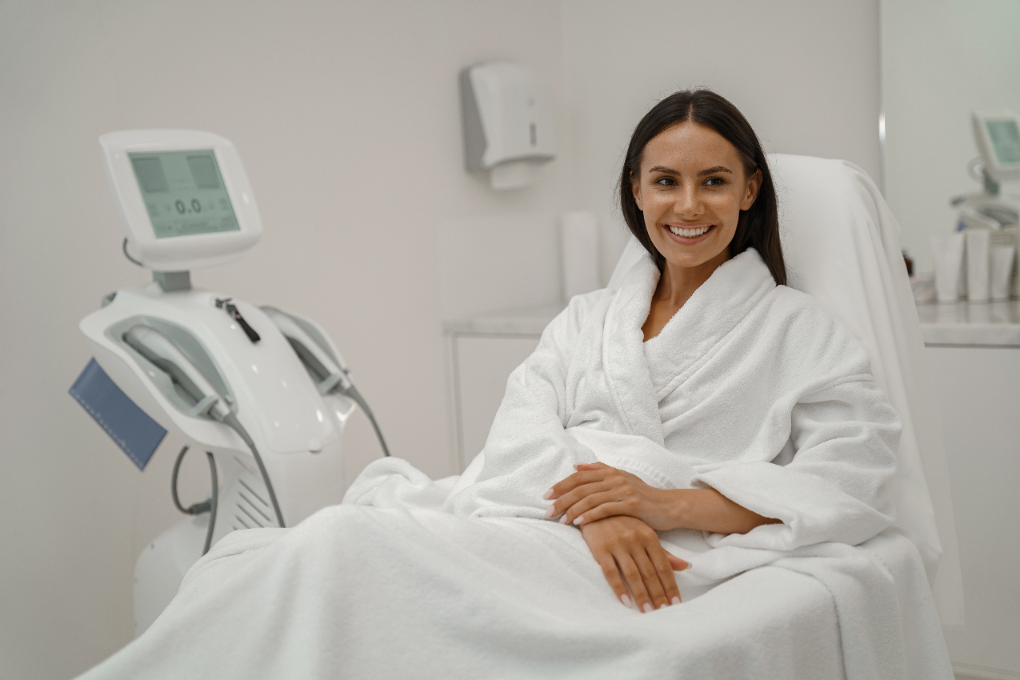

Non-Surgical Myoma Treatment
Myomas are one of the most common benign tumors seen in women. These formations originating from the muscular layer of the uterus can be seen at any age but are more prevalent in women aged 30-50 years. Myomas often progress silently, but when they grow, they can cause serious problems such as irregular menstruation, pelvic pain, urinary urgency, and infertility.
Today, it is possible to achieve effective results for myoma treatment without requiring surgery, using non-surgical and uterus-preserving methods.
Dr. Atasoy Clinic is one of the experienced centers in Turkey for non-surgical myoma treatment (embolization and ablation methods).
What is Myoma?
Myomas are generally benign tumors resulting from abnormal overgrowth of muscle cells in the uterine wall.
In medical terminology, they are also called "uterine fibroids."
Their sizes vary from a few millimeters to 15-20 centimeters.
Myoma Symptoms
-
Prolonged and heavy menstrual bleeding
-
Intermenstrual bleeding
-
Fullness sensation in pelvic or lumbar region
-
Urinary frequency or constipation
-
Pain during sexual intercourse
-
Infertility or recurrent miscarriages
Some myomas may exist without symptoms, making routine gynecological examinations very important.
Types of Myomas
Myomas are divided into three main groups based on their location:
-
Submucosal Myoma: Located close to the inner wall of the uterus, increases menstrual bleeding.
-
Intramural Myoma: Located in the muscular layer of the uterus, is the most commonly seen type.
-
Subserosal Myoma: Grows toward the outer surface of the uterus and can create pressure inside the abdomen.
How each myoma is treated depends on its location, size, and the patient's fertility desires.
Non-Surgical Myoma Treatment Methods
At Dr. Atasoy Clinic, myoma treatments are performed while preserving the uterus and without requiring surgery.
The main methods used are:
1. Uterine Artery Embolization (UAE)
This method is the most effective non-surgical myoma treatment, causing myoma shrinkage by cutting off its blood supply.
Through a fine catheter inserted from the groin area, arteries feeding the uterus are reached.
Vessels supplying the myoma are blocked with special microspheres, and the myoma gradually shrinks.
Advantages:
-
General anesthesia is not required, local anesthesia is sufficient.
-
The uterus is not removed, preserving fertility.
-
The procedure takes 45-60 minutes.
-
Average 60-80% reduction in myoma volume is achieved.
-
Significant reduction in bleeding and pain occurs.
-
Patient is discharged within 1 day.
Application: Most suitable option for patients with multiple myomas or those carrying surgical risk.
2. Radiofrequency Ablation (RFA)
Myoma tissue is targeted and destroyed with radiofrequency energy.
Under ultrasound or MR guidance, a fine needle is placed in the myoma.
Using this needle, heat is applied to destroy myoma tissue.
Advantages:
-
Non-surgical, stitch-free, and scar-free.
-
Uterine integrity is preserved.
-
Procedure takes 30-40 minutes.
-
Patients are discharged the same day.
-
Myoma shrinkage becomes visually noticeable within 1-3 months.
RFA method is effective for single or medium-sized myomas.
3. Microwave Ablation (MWA)
Similar to RF, the inner part of the myoma tissue is exposed to high temperature with microwave energy, rendering it ineffective.
Provides quick and powerful results for large myomas.
Advantages:
-
Preserves blood vessels, affecting only target tissue.
-
Bleeding risk is extremely low.
-
Does not damage uterine tissue.
-
Can be safely used in women planning pregnancy.
4. HIFU (High Intensity Focused Ultrasound)
This method is based on focused ultrasound waves from outside heating the myoma from inside and shrinking it.
It is a completely needle-free, incision-free treatment method.
However, it may not be suitable for all myoma types; suitable candidates are determined through detailed imaging analysis.
How Does the Treatment Process Progress?
-
Evaluation: MRI and ultrasound determine the myoma's location, size, and vascular structure.
-
Planning: The appropriate non-surgical treatment method is selected based on myoma type.
-
Application: The procedure is performed under local anesthesia with imaging guidance.
-
Healing: Patient usually walks and is discharged the same day.
-
Follow-up: Myoma shrinkage rate is evaluated at 1, 3, and 6-month follow-ups.
Recovery after non-surgical myoma treatment is quite rapid.
Most patients return to normal life within 1-2 days.
Advantages of Non-Surgical Myoma Treatment
-
The uterus is preserved, fertility continues.
-
No incisions, stitches, or scars.
-
Blood loss is minimal.
-
Rapid recovery is provided.
-
Hospital stay is minimal.
-
Menstrual cycle and hormonal balance are preserved.
Thanks to modern ablation systems used at Dr. Atasoy Clinic, high success rates and minimum risk are achieved in myoma treatment.
Additionally, personalized planning for each patient preserves uterine tissue, ensuring functional and aesthetic integrity is not compromised.
Who is it Suitable For?
-
Women who do not wish to have surgery
-
Those wanting to preserve fertility potential
-
Those with single or multiple myomas
-
Those experiencing excessive bleeding, pain, or pressure sensation due to myomas
-
Those carrying surgical risk
In cases with suspicion of malignant tumors, biopsy is performed first, and appropriate method is selected following oncological evaluation.
Myoma Treatment Experience at Dr. Atasoy Clinic
Dr. Atasoy Clinic employs a multidisciplinary approach that brings together interventional radiology, gynecology, and imaging specialists for non-surgical myoma treatments.
All procedures are performed under high-resolution ultrasound and MR guidance in a sterile environment.
Our patients return home the same day and feel significant relief in their complaints within 1-2 weeks.
Intense bleeding caused by myomas decreases, pain disappears, and uterine functions are preserved.
Dr. Atasoy Clinic, as one of Turkey's reference centers for non-surgical myoma treatment, provides women with comfortable, safe, and permanent solutions.
